
You’ll trigger more smallmouth reaction strikes by matching speed to current, mood, and cover. In faster seams and clear water, use quick pops, sharp darts, and heavier heads to force split‑second bites. When fish are neutral, pressured, or hugging rocks and grass, slow down with lighter weights, subtle twitches, and longer hangs in the strike zone. Start fast, then shift slower if you get follows but no bites, and you’ll discover exactly when each style shines.
Overview: River Current Factors
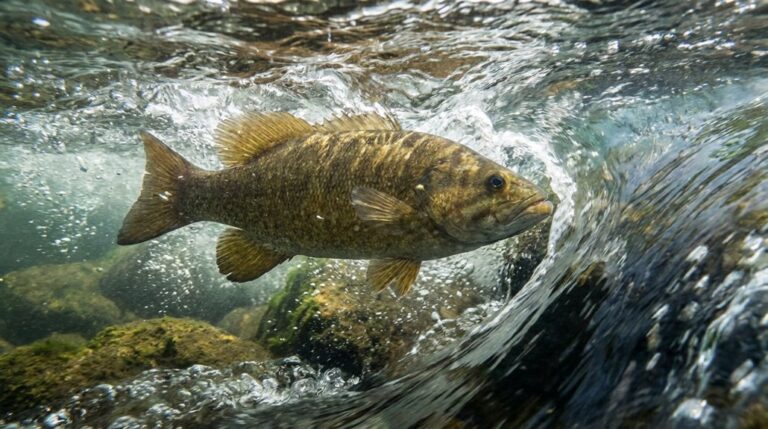
Ever notice how the same bait suddenly gets crushed as soon as it hits moving water? That’s river current triggering reaction strikes. As your lure sweeps through seams and eddies, the flow adds secondary motion you can’t fully control—little stalls, surges, and angle changes that flip a smallmouth’s switch.
Current also tightens the strike window. In faster water, fish won’t track a bait forever, so shorter, high-impact retrieves usually outproduce long, lazy pulls. Focus on moderate to strong current near timber, rock shelves, and bottom transitions, where smallmouth stack up and react to speed.
Fish often hold on the current edge, flaring at sudden bursts that mimic fleeing prey, while slackwater pockets demand sharper pops and twitches to draw strikes. The diverse fishing environments in Venice, Louisiana create ideal conditions for understanding how current affects smallmouth behavior.
Detailed Features
When you break reaction strikes down into specific features, speed becomes less about how fast you reel and more about how abruptly your lure demands attention. Fast presentations work because they create sudden, eye-catching moves—sharp pops, hard flares, quick darts, or a bait crashing off rocks and logs. Those violent direction changes flip a smallmouth’s reflex switch, not its appetite.
You’ll see this especially in clear water or around visible cover, where bass watch everything. A bait that jumps, stalls, then flashes away often gets hammered before it leaves the strike zone. Slow presentations, by contrast, hinge on precision. You’re creeping the lure through tight spots, watching how fish track it, and letting subtle twitches annoy territorial or post-spawn bass into biting. Regular maintenance of sharp hooks ensures that your bait presentation remains effective, ultimately increasing your chances of a successful catch.
Lure Weight & Hook Size
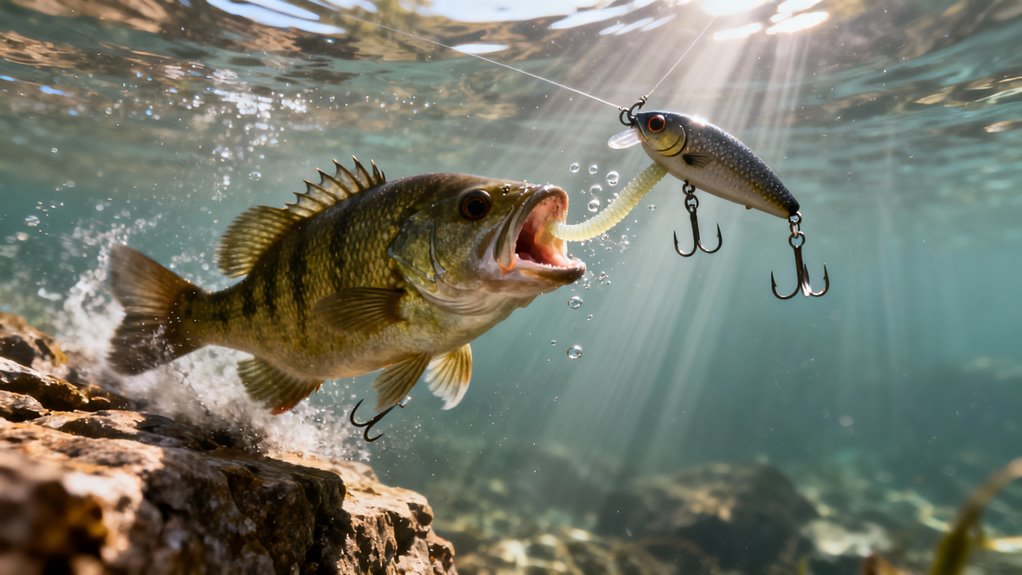
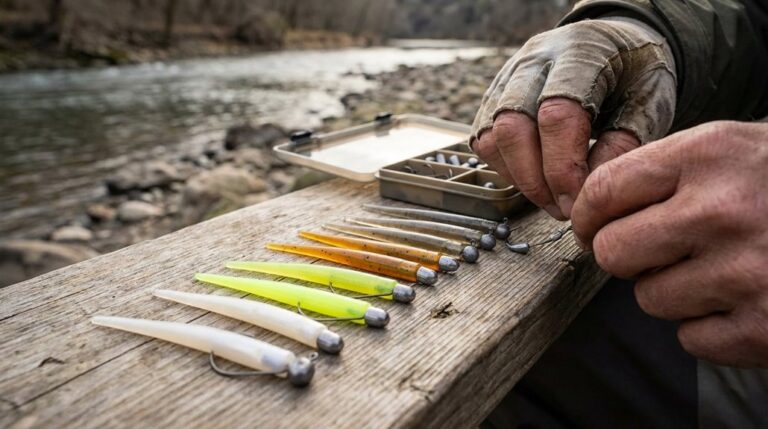
Those sharp darts and stalls don’t happen on their own—lure weight and hook size control how violently or subtly your bait moves through the water. Heavier heads and bigger hooks fall faster, stall less, and throw more “punishment” and secondary motion, which often flips the switch on aggressive smallmouths in bright, clear water or tight cover.
Use lighter jig heads and smaller hooks when fish are pressured, nipping tiny forage, or hugging rocks and grass. The slower drop and softer body roll look safer, so they’ll track and sip instead of bolt and smash. Understanding environmental factors like water temperature can also help you make the right choice for your lure presentation.
| Situation | Better Choice |
|---|---|
| Clear water, heavy cover, current | Heavier weight, larger hook |
| Murky water, sparse cover | Lighter weight, smaller hook |
| Rapid, short-strike bites | Small, sharp hook on light bait |
Pros and Cons
Now that you’ve got a handle on lure weight and hook size, you need to weigh the real-world pros and cons of fast and slow presentations. Each speed excels at triggering certain types of reaction strikes but also carries tradeoffs that can cost you bites. By understanding where each shines and where it falls short, you’ll know when to speed up, slow down, or mix both in the same spot. Additionally, sonar technology can be crucial in identifying fish schools, allowing you to adjust your presentation speed more effectively.
Pros
Surprisingly, both fast and slow presentations offer clear advantages when you’re targeting smallmouth reaction strikes. Each style shines in different situations, and knowing when to lean on speed or patience lets you trigger more bites, even from neutral fish.
- Fast triggers non-feeding fish When bass aren’t actively hungry, a sudden burst of speed can force a split‑second decision, turning neutral followers into biters.
- Fast overpowers wary fish Rapid retrieves and erratic action can overwhelm cautious smallmouth, especially in clear water or around heavy cover.
- Slow locks into the strike zone A slow approach keeps your bait in front of fish longer, boosting your odds.
- Slow excels around spawning beds During the spawn, a slowly worked lure can provoke territorial, aggressive reaction bites. Additionally, understanding local fishing patterns can help you choose the most effective presentation based on seasonal behaviors.
Cons
Drawbacks come with both fast and slow presentations, and ignoring them can cost you bites. Each style has blind spots that leave fish untouched, even when you’re around a hot school.
- Fast presentations can overshoot fish. You’ll blow past smallmouth buried in rock, grass, or wood, never giving them time to react.
- Speed can spook wary bass. In clear water, a burning bait may flash by too aggressively, dropping your hookup ratio.
- Slow presentations waste time during peak activity. When fish want to chase, creeping a bait just lets them ignore it.
- Slow sessions shrink your strike window. If the bite’s reaction-driven, you’ll miss flurries by not covering water quickly and forcing reflex strikes.
- Consideration of rod action plays a crucial role in determining how effectively your presentation will entice strikes.
FAQ’s
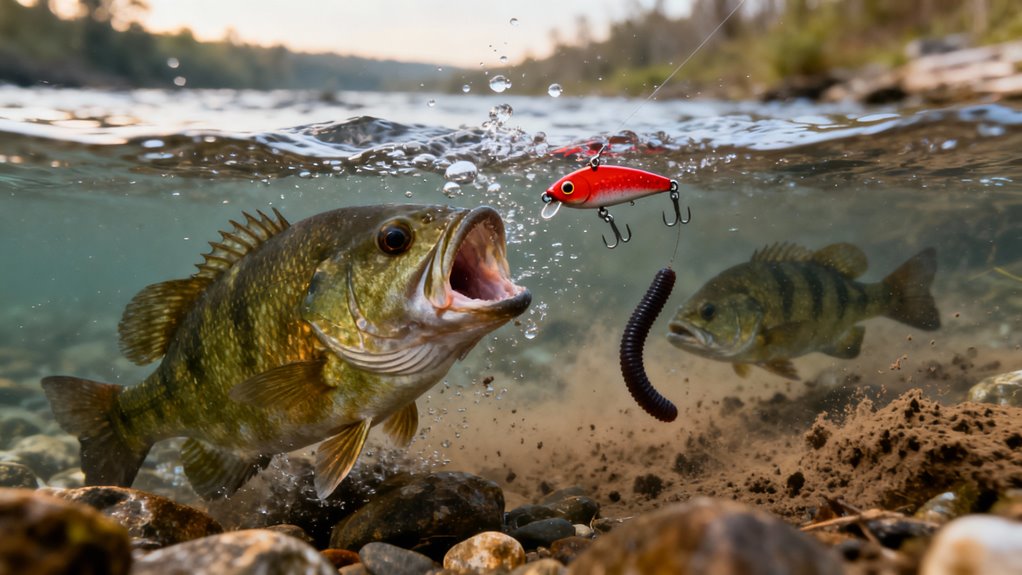
How do you turn theory into more fish in the boat when it comes to reaction strikes? Below are quick answers to common questions.
Do smallmouth hit because they’re hungry? Often, no. Most bites are reaction strikes to your lure’s movement.
When should you fish fast? Fish fast around cover or structure when bass are active, especially spring and post‑spawn.
When should you fish slow? Fish slow when they follow but don’t commit, or in late season when they’re wary.
How slow is “slow”? Use a steady retrieve with short pauses, just enough for them to close the gap.
How do you decide what to try first? Start fast, maintain contact with cover, then slow down if you’re getting follows without bites. Additionally, keeping your catch fresh and properly cleaning fish can enhance the overall experience of your fishing trip.
Final Verdict
Ultimately, reaction strikes are the whole game with smallmouth—they’re hitting what your lure does, not what it looks like on a menu. You’re provoking them, not feeding them.
Fast presentations shine when fish act aggressive or at least neutral; speed and sharp direction changes flip that instinct switch and make them lash out.
Slow presentations matter just as much. When bass won’t chase, you can still get reaction bites by grinding through cover, pausing, and letting secondary movements—line ticks, bait quivers—trip their trigger.
Don’t lock into one tempo. In each spot, start fast to pick off active fish, then slow down to mop up the rest. Let season, clarity, and cover decide which pace you lean on first. Additionally, understanding the importance of water quality can enhance your fishing strategy, especially in areas affected by urbanization.
Frequently Asked Questions
What Is the 80 20 Rule in Bass Fishing?
The 80/20 rule in bass fishing says you’ll get about 80% of your bites from 20% of spots and techniques. You track what produces, double down on those areas and lures, and drop the rest.
What Is the 90/10 Rule for Bass Fishing?
The 90/10 rule says you’ll get 90% of bites from 10% of spots or presentations. You focus on high-percentage structure, proven lures, and retrieves, constantly reassessing what’s hot instead of endlessly exploring low-percentage water.
What Time of Day Are Smallmouth Bass Most Active?
They’re most active around sunrise and sunset. You’ll see peak feeding in the first 1–2 hours after dawn and the last 1–2 before dark, especially during summer’s cooler low-light periods and post-front weather windows.
What Is the Secret to Catching Smallmouth Bass?
You catch smallmouth by triggering reaction strikes. You work mid‑to‑fast retrieves, add erratic pops and direction changes, and bounce lures off cover. You adjust speed, lure style, and secondary action until neutral fish lash out.
Final Thoughts
When you chase reaction strikes from river smallmouth, let the current decide your speed. In fast flows, burn heavier baits to trigger their reflex; in slower water, glide a lighter lure to tempt followers into biting. Match hook size and weight to depth and cover, and you’ll avoid snags while keeping hookups solid. Rotate fast and slow presentations, pay attention to how fish respond, and you’ll quickly dial in what works that day.