
In southern reservoirs, you’ll catch more largemouth by tracking warm-water shifts, shad movements, and offshore structure. In late summer, shad slide onto near-shore flats and edges, and bass follow, stacking along weedlines, points, and drop-offs. As surface temps push past 70°F, bass transition offshore to ledges, humps, brush piles, and thermocline depths around 15–20 feet. Use electronics, deep cranks, jigs, and finesse rigs to stay on fish as their seasonal patterns change and unlock consistent success.
Overview: Late-August Shad Migration
When late August heat settles over southern reservoirs, shad begin sliding out of open water and pushing onto near-shore flats, and the bass don’t hesitate to follow. You’ll see the action concentrate where those flats drop into deeper water, turning subtle edges into feeding lanes.
Shad use weedlines, points, and drop-offs as travel corridors, and largemouth stage just below or beside them. On sunny, calm afternoons with stable warm water, bait movement spikes and bass feed aggressively. You don’t have to chase the entire lake; you just need to track where shad stack along these edges. Shad-imitating baits excel now because they match what bass expect to see flashing across those flats and slipping over the break into deeper water. Additionally, understanding local fishing regulations can help ensure that your fishing practices contribute to the sustainability of these thriving bass populations.
Detailed Features
How do you turn that late-summer shad migration into a repeatable pattern instead of a lucky flurry? You start by mapping where bass actually live once surface temps pass 70°F. Most slide to offshore cover deeper than 15 feet, especially brush and ledges close to shad routes. That depth often matches the thermocline—usually 15–20 feet—where cooler, oxygen-rich water concentrates both bait and bass. Lake Wawasee, known for its abundant Largemouth Bass, provides excellent opportunities for targeting these fish as they transition to deeper waters. You’ll see a fleeting shallow bite on topwaters and spinnerbaits early, then fish quickly pull to nearby breaks when the sun gets high. On clear reservoirs, you’ll do better with drop-shots and long-cast deep presentations. In stained water, lean on rattling jigs, chatterbaits, or big-bladed spinnerbaits to comb those same offshore targets.
Product Specs: Rods & Electronics
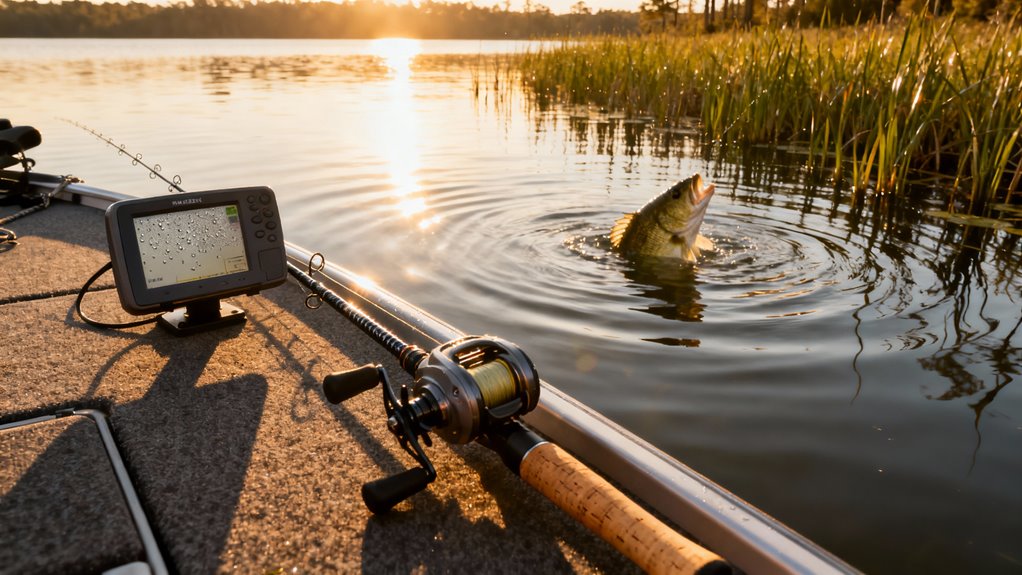
Why guess where those deep fish are living when your gear can show you exactly what’s below? In warm southern reservoirs, you’re targeting bass deeper than 15 feet, so match a medium-heavy or heavy rod with a fast tip to your offshore jigs, big plastics, and deep cranks. Pair it with a high-capacity reel so long casts and heavy line don’t slow you down. Additionally, using rods constructed with corrosion-resistant materials will enhance their durability in challenging conditions.
| Gear Piece | What It Does | How It Feels When It Clicks |
|---|---|---|
| MH/H Fast Rod | Drives hooks, senses rock | Solid thump, firm control |
| Big-Spool Reel | Long casts, strong drag | Confident, in command |
| 2D Sonar | Shows depth, bottom edge | Certainty replaces doubt |
| Side Imaging | Reveals humps, brush | Hidden world, disclosed |
| Fluoro Leader | Stealth, sensitivity | Subtle ticks, clean bites |
Use 6–8 ft fluorocarbon leaders over 10–14 lb main line for clear, deep structure.
Pros and Cons
Now that you’ve got the gear and a basic game plan, you need to understand the pros and cons of chasing warm-water largemouth offshore. You’ll gain access to less-pressured fish grouped on predictable spots, but you’ll also face deeper, more technical presentations that punish sloppy execution. Let’s break down how these advantages and drawbacks affect where you fish, what you throw, and how you manage your time on the water. Additionally, seasonal migrations can influence the locations of these fish, making it essential to stay informed about their patterns.
Pros
Surprisingly, warm-water periods on southern reservoirs stack the odds in your favor by concentrating largemouth on very specific offshore structure instead of spreading them across the bank.
As water climbs past the mid‑70s, bass slide to ledges, humps, brush piles, and thermocline edges, giving you defined targets instead of miles of guesswork shoreline.
You can lean into power techniques and bottom-contact rigs that cover water and trigger aggressive fish:
- Texas and Carolina rigs or football jigs on mid‑ to deep‑water points and brush for quality bites.
- Deep‑diving crankbaits to quickly probe ledges and humps, then clean up with slower presentations.
- Drop‑shot rigs and slow‑rolled jigs along weed lines and drop‑offs when bass pin to thermocline boundaries.
Additionally, maintaining sharp hooks is crucial for maximizing your catch rates during these concentrated feeding periods.
Cons
Heat comes with a price in southern reservoirs, and warm-water patterns aren’t always forgiving. Once surface temps push into the mid-80s and above, bass don’t feed as efficiently, and you’ll see more stress, slower growth, and fewer quality shallow bites. You can’t just chase shade lines and expect consistent results.
- You’ll often need to abandon shoreline cover and commit to offshore ledges or humps.
- Productive water may slide from 6–12 feet in early summer to 15–20 feet in clear, peak-summer conditions.
- Surface readings can fool you; thermoclines stack cooler, oxygen-rich water deeper than your electronics’ first number suggests.
- It’s crucial to understand that responsible handling of fish during warmer months can significantly improve their chances of survival after catch and release.
If you over-commit to topwater and bank targets, you’ll miss the real pattern sliding offshore.
FAQ’s
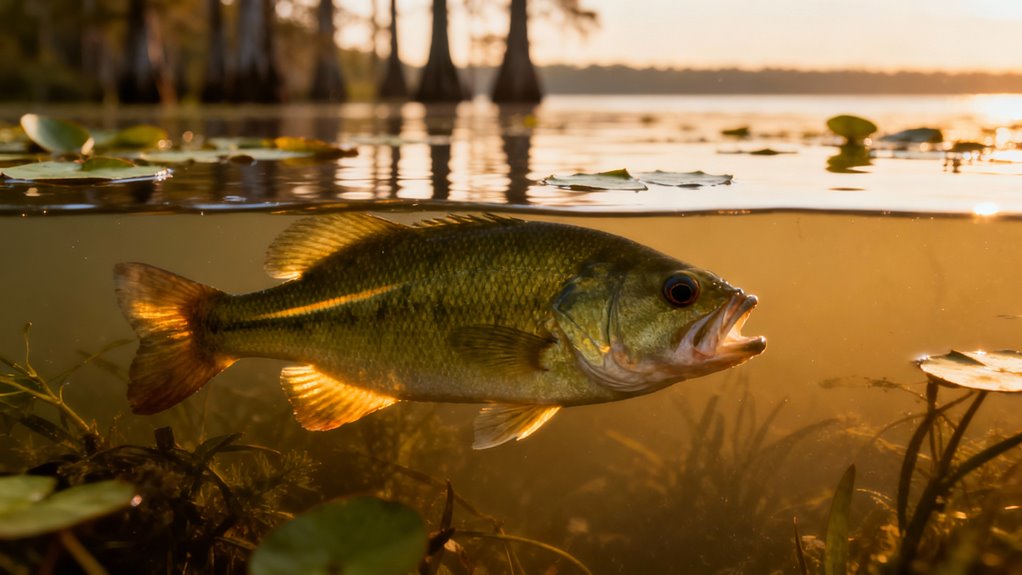
How do you turn all these warm-water patterns into consistent bites on your home reservoir? Start by watching surface temps. Once they push above the low 80s, you should scan offshore for hard bottoms, long points, humps, and brush in 15–30 feet.
What’s the best time to fish? Early and late, when bass slide shallower to feed. Midday, slow down offshore with bottom-contact baits.
How do you pick baits in clear vs. stained water? In clear water, lean on drop-shots and deep cranks along structure. In stained water, use heavier jigs and power baits to stay in contact and trigger reaction bites.
When should you ditch moving baits? Once temps exceed about 84°F, prioritize Carolina rigs, football jigs, and other bottom-oriented presentations. Additionally, understanding bass behavior can greatly improve your catch rates as you adapt to their feeding patterns.
Final Verdict
You’ve got the key pieces—where to look, when to be there, and what to throw—so the real takeaway is simple: in warm southern reservoirs, you win by thinking deeper and fishing the edges of comfort.
You’re targeting bass that slide offshore to cooler, oxygen-rich layers, often 15 feet or more, and keying on ledges, humps, and brush.
Lean on deep-diving crankbaits, drop-shots, and Carolina rigs when they lock to that structure, especially around the thermocline.
Use early and late windows for shoreline topwater, then shift offshore or to shade as the sun climbs.
If you consistently track bait, thermocline depth, and subtle edges, you won’t just “find some fish”—you’ll stay on the strongest schools all summer. Additionally, understanding the fishing environment in locations like Venice, Louisiana, can further enhance your angling success by providing insights into seasonal fish behavior and habitat preferences.
Frequently Asked Questions
What Is the 80/20 Rule in Bass Fishing?
The 80/20 rule in bass fishing says you’ll get about 80% of your bites from 20% of spots. You focus on key structure and your most reliable lures, then keep refining those high-percentage areas.
What Is the 90/10 Rule for Bass Fishing?
The 90/10 rule means you’ll catch about 90% of your bass from roughly 10% of the water. You focus on a few high-percentage spots, refine your presentations, and repeatedly work those proven areas.
Where Do Bass Go When It’s Hot?
They slide offshore into deeper, cooler water, around 12–20 feet, holding on ledges, humps, and drop‑offs near the thermocline. You should target shady edges of brush, rock, and weedlines with deep cranks, football jigs, and drop‑shots.
What Is the Best Temperature to Catch Largemouth Bass?
You’ll catch largemouth bass best when water’s 82–84°F, where their feeding and growth peak. If temps climb higher, you should target deeper structure or the thermocline, where cooler, oxygen‑rich water keeps bass actively feeding.
Final Thoughts
You’re heading into late August with a clear game plan. When shad slide shallow and suspend off structure, you’ll track them with your electronics and stay versatile with your rod setups. Focus on key features—points, humps, brush, and channels—and rotate baits to match their mood. Warm-water largemouth won’t sit still, and you can’t either. Trust the pattern, adjust to the conditions, and you’ll stay on quality fish all season.