

Bass Fishing Gear Ratios: Match Retrieve Speed to the Bait starts with a simple distinction: a reel’s ratio describes how its gears turn, while line pickup tells you how much line comes in with each handle turn. At The Reel Authority, we match those numbers to bait resistance, fishing conditions, and the pace you want to control.
Free Printable Field Reference & Checklist (PDF)
Save or print our one-stop reference sheet for this guide: Baitcasting Gear Ratio and Inches-Per-Turn (IPT) Technique Matching Matrix. Includes the full specification comparison matrix and step-by-step field checklist.
Key Takeaways
| Question | Quick answer |
|---|---|
| What does a reel ratio tell you? | How many times the reel’s drive turns for each handle turn. It does not give an exact line pickup or lure speed. |
| What is a versatile gear ratio for bass fishing? | A middle ratio, around 6.3:1, suits many moving baits and offers useful line recovery for varied techniques. |
| Is a 6.3:1 ratio good for bass? | Yes. It sits in the middle range and can work well for anglers who want a flexible retrieve without choosing an especially slow or fast reel. |
| At what speed should you retrieve a lure? | Use the pace that keeps the bait working in its intended zone. Handle cadence and rod movement set that pace more directly than the ratio alone. |
| How can two reels with the same ratio pick up different amounts of line? | Their spool sizes and line fill can differ, changing how much line each turn collects. |
| When is fast line pickup most useful? | When you need to recover slack quickly, keep contact with a jig or soft plastic, or take up line before a hookset. |
Our bass fishing collection offers more technique and seasonal context for anglers fine tuning their setups.
What a gear ratio tells you, and what it does not
A 6.3:1 gear ratio means the drive mechanism turns 6.3 times for each turn of the handle. On a baitcasting reel, that means 6.3 spool rotations, but it does not promise a fixed amount of line retrieved or a set lure speed.
For reel comparisons, look at inches per turn whenever that measurement is available. Spool diameter and line fill affect pickup, so a wider, fuller spool gathers more line with each turn than the same spool after line has come off.
Ratio also does not dictate how fast a bait must move. You control the pace with your handle cadence and rod movement, which means a fast reel can still work a slow presentation when you turn the handle deliberately.
For a visual starting point, the category image below links to bass fishing technique articles that can help put your gear choices in context.

Compare slower, middle, and faster retrieve options
Slower ratios give you more mechanical advantage for sustained resistance. Middle ratios suit many moving baits, while faster ratios recover line quickly when slack pickup matters.
Here is a practical comparison for standard sized baitcasting reels. The pickup figures are starting points, because spool size and fill affect what any particular reel collects.
| Ratio | Approximate line pickup per handle turn | Typical retrieve role | Tradeoff |
|---|---|---|---|
| 5.1:1 | 20 to 22 inches per turn on a standard sized baitcast reel, according to Louisiana Sportsman. | Sustained resistance and slower presentations | More leverage, slower slack recovery |
| 6.3:1 | Middle range, with actual pickup depending on spool size and fill | Versatile moving bait work | Balanced pace and recovery, without the leverage of a slower reel |
| 7.1:1 | Fast pickup, best compared by inches per turn | Quick slack recovery and line pickup | Less mechanical advantage under sustained load |
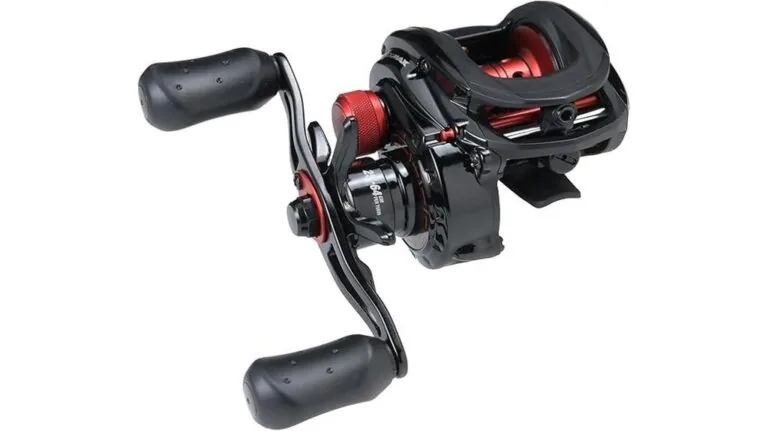
Gear ratio comparisons matter across reel styles, too, so we focus on what the reel retrieves rather than the printed number alone. Our Gear Reviews include baitcasting reel coverage for anglers comparing reel designs and handling.
For regional fishing context, current and lure control are worth considering when you plan a retrieve.
For a quick visual comparison, In-Fisherman describes a 5:1 reel as retrieving roughly 20 inches per crank and a 7:1 reel as retrieving around 30 inches, with other factors equal.
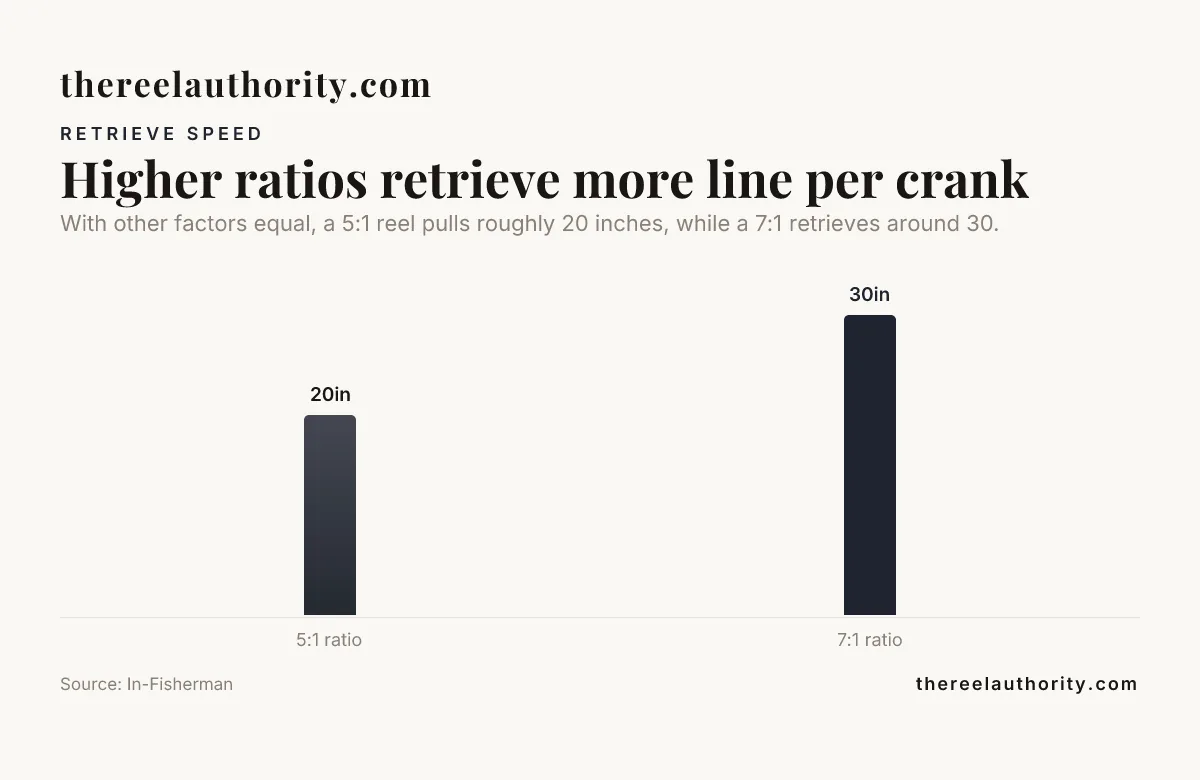
With other factors equal, a 5:1 reel pulls roughly 20 inches, while a 7:1 retrieves around 30.
Source: In-Fisherman
Match the ratio to the bait and its resistance
Deep diving crankbaits and other high resistance baits are easier to work with a slower or middle ratio. A fast reel can make a resistant bait tiring to turn and can make it harder to hold a steady pace through the retrieve.
Around 6.3:1 is a useful middle option for spinnerbaits, bladed jigs, and other moving baits. For standard sized baitcast reels, Louisiana Sportsman gives 25 to 27 inches per turn for a 6.3:1 ratio.
For soft plastics and jigs, faster line pickup can help you recover slack and maintain contact before a hookset. Use the rod to lift, sweep, or shake the bait, then use the reel to take up slack rather than making every turn a power move.
Topwaters, buzzbaits, and lipless crankbaits can also benefit from fast pickup when you need quick recovery between casts or after a bait change. Keep your cadence controlled so the lure stays at the pace you intend.
A bass reacting to a moving presentation is a reminder that lure pace and timing belong together. These smallmouth reaction strike examples provide a useful visual alongside the retrieve choices.


Adjust for depth, current, cover, and lure control
For deep running or high resistance baits, prioritize leverage and a steady retrieve that keeps the lure in its strike zone. Turning too quickly can pull a bait out of the depth or pace you are trying to hold.
Heavy cover changes the priority. When a bass may turn toward cover, rapid slack pickup can help you regain contact and move the fish, but a resistant bait still demands effort from the angler and reel.
Current moves both bait and line, so adjust handle cadence to the water rather than relying on ratio alone. If the lure is moving too fast, slow the handle and use measured rod movement; if it falls behind or leaves slack, increase cadence or use a faster pickup reel.
When depth changes shape your presentation, sonar can help you read the water around a target area. Our Garmin Striker Vivid 4cv review offers related fish finder context for anglers planning where to work a lure.
Use the rod and handle to set the retrieve pace
Before casting, choose a deliberate handle cadence and repeat it for several casts. Then make small changes while watching how the bait tracks, because gradual adjustments make it easier to notice whether the lure or your retrieve caused a change.
For soft plastics and jigs, use rod sweeps, lifts, and pauses to create action. The reel’s main job is to recover slack and keep you connected to the bait.
With moving baits, make a few casts at one steady cadence before changing speed. That gives you a consistent baseline for judging whether a new pace improves the lure’s action.
Do not crank harder simply because a reel has a high ratio. A high pickup reel can be a powerhouse for line recovery, while the rod supplies action and the handle retrieves only the line you need.
Choose a versatile ratio and compare reel types fairly
For one reel covering varied bass techniques, a middle ratio is a practical starting point. Move slower when your main baits create sustained resistance, or faster when quick slack pickup and line recovery matter most.
A standard sized baitcasting reel with a 7.1:1 ratio takes up 29 to 30 inches per turn, according to Louisiana Sportsman. Treat that as a fast pickup reference, since spool size and fill affect the line a reel actually retrieves.
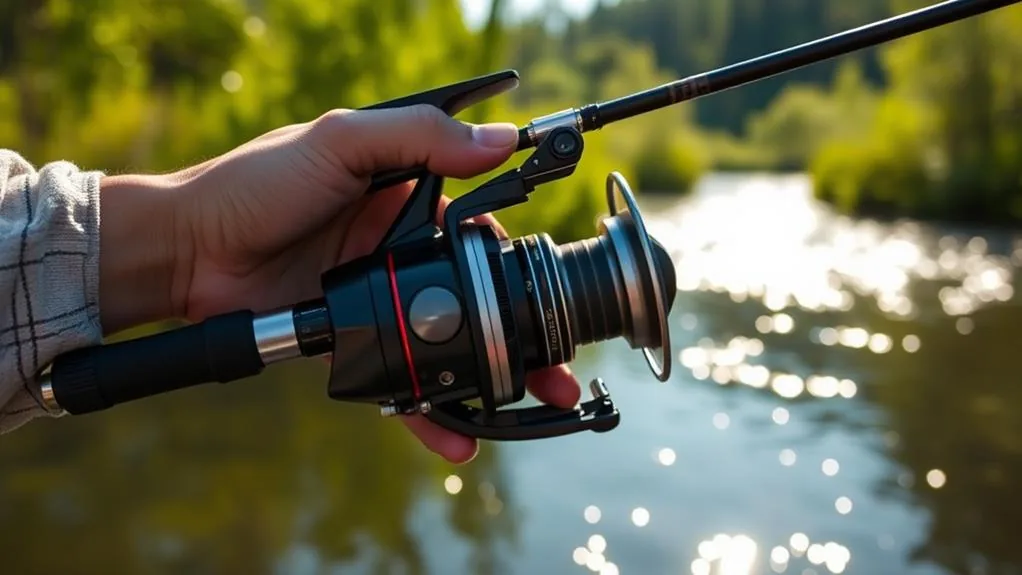
Do not compare a baitcasting reel and a spinning reel by printed ratio alone. In a baitcaster, the ratio describes spool rotations; in a spinning reel, it describes rotor rotations around the spool, so inches per turn and intended technique give a fairer comparison.
Your rod, line, and bait resistance all belong in the decision. A reel ratio cannot remove the effort of a high resistance lure or replace good rod control.
Our Top Bass Fishing Lakes in New England article covers bass fishing lakes, hotspots, and seasonal tactics, useful context when you are planning a flexible bass fishing rod and reel setup.
For anglers weighing a full setup, the image below links to our baitcasting combo guide. It gives you a place to consider the reel alongside the rod instead of treating ratio as the only setup choice.
Step by step field checklist for choosing and tuning a ratio
- Identify the bait. Estimate its resistance and running depth, then decide whether the technique needs steady pressure, quick slack pickup, or fast line recovery.
- Choose a starting range. Start slower for sustained resistance, in the middle for mixed moving bait use, or faster when line recovery is the priority.
- Compare inches per turn. Check line pickup as well as ratio, especially when comparing different spool sizes or reels with different fill levels.
- Test a controlled retrieve. Make several casts at a consistent handle cadence, then adjust handle speed and rod movement until the bait stays in its intended zone.
- Assess the feel under load. If the retrieve feels laborious, choose more leverage; if slack recovery or contact feels slow, look for more line pickup.
Keep this process simple and your setup becomes easier to dial in. Savvy anglers match the reel to the job, then use cadence and rod control to make the presentation their own.
Frequently Asked Questions
Does a high gear ratio make a reel harder to turn when a fish is pulling?
It can take more handle effort to turn a fast geared reel under a heavy load because the gearing trades some mechanical advantage for speed. Handle length and the reel’s construction also affect how that load feels in your hand.
Can a longer rod make up for choosing the wrong gear ratio?
No, rod length does not change the reel’s gearing or its line pickup per turn. It can change casting reach and the arc of a hookset, but it cannot turn a slow pickup reel into a fast one.
Does braid or fluorocarbon change how much line a reel retrieves per handle turn?
The line material does not change the reel’s gear ratio, but line diameter and how the line sits on the spool affect its effective circumference. That can change pickup as the spool empties or fills.
Can you change a reel’s gear ratio after buying it?
Some reel models accept compatible replacement gear sets, while others are not practical to convert. A spool change can alter line pickup, but it does not change the gear ratio.
Does the drag setting change a reel’s line pickup?
The drag setting does not change the gear ratio or normal pickup while the spool turns with the handle. If the drag slips under load, line can leave the spool even as you continue turning the handle.
Does left hand or right hand retrieve affect a reel’s ratio?
No, handle orientation does not change the gear ratio. Choose the retrieve side that lets you cast, set the hook, and work the bait comfortably through repeated casts.
Conclusion
Bass Fishing Gear Ratios: Match Retrieve Speed to the Bait by comparing line pickup, bait resistance, and the control each technique needs. A middle ratio is a flexible starting point, while slower or faster options make sense when your primary baits call for more leverage or quicker recovery.
Use inches per turn to compare reels, then set your actual retrieve with handle cadence and rod movement. That is the crucial move that keeps your bait working where you want it, whether you are slow rolling a spinnerbait, fishing a jig, or working a crankbait through depth.
Download the Companion Printable Reference Sheet (PDF)
Save or print our one-stop reference sheet for this guide: Baitcasting Gear Ratio and Inches-Per-Turn (IPT) Technique Matching Matrix. Includes the full specification comparison matrix and step-by-step field checklist.