

Kayak Fishing in Wind: Decide When to Drift or Anchor comes down to one practical test: can you fish effectively while keeping the kayak oriented for a safe exit? Anchor when you need a stable casting position and can hold it safely, or choose a controlled drift when moving across productive water is useful and the kayak remains manageable.
Free Printable Field Reference & Checklist (PDF)
Save or print our one-stop reference sheet for this guide: Kayak Wind Speed Tactical Chart: Drift Sock Sizing vs Anchor Trolley Setup. Includes the full specification comparison matrix and step-by-step field checklist.
Key Takeaways
| Decision | Use this rule |
|---|---|
| Anchor or drift | Anchor for a precise position when the kayak can hold a safe orientation. Drift when covering water is useful and you can control your course. |
| Changing conditions | Watch gusts, waves, current, and your return route. Leave if control or a safe return becomes doubtful. |
| Anchor choice | Match the anchor to the bottom. A grapnel can catch structure, a mushroom suits soft bottoms in protected water, and a claw can work across varied bottoms when it sets properly. |
| Line scope | Use 3 to 5 feet of anchor line for each foot of water depth as a practical starting calculation, then allow room for the kayak to swing. |
| Drift control | A drift sock slows and steadies a drift. It does not hold the kayak in one spot. |
| More kayak fishing guidance | Find practical fishing advice from The Reel Authority. |
Choose Between Anchoring and Controlled Drift
Anchor when a precise casting angle, shoreline pocket, or small target area matters, and your kayak can stay oriented safely against the combined wind and current. A steady position lets you repeat casts to the same place instead of spending each retrieve correcting your course.
Choose a controlled drift when you want to cover a broad flat, weed edge, or other stretch of water and can manage the kayak as it moves. An anchor can put you in an awkward or exposed position, so holding still is not automatically the safer choice.
Compare wind direction with current direction and strength before you commit. If they oppose each other or cross, the kayak can yaw or rotate, changing the direction of pull on an anchor line and potentially turning the hull broadside.
Windage matters, too. A high sided kayak, your seated body, and raised rods or gear catch more wind than a low profile setup, so the kayak may drift faster or load an anchor more strongly than you expect.
For related kayak fishing tips and equipment advice, visit our kayak fishing guides. We start with conditions, then choose the position that lets us fish without sacrificing control.
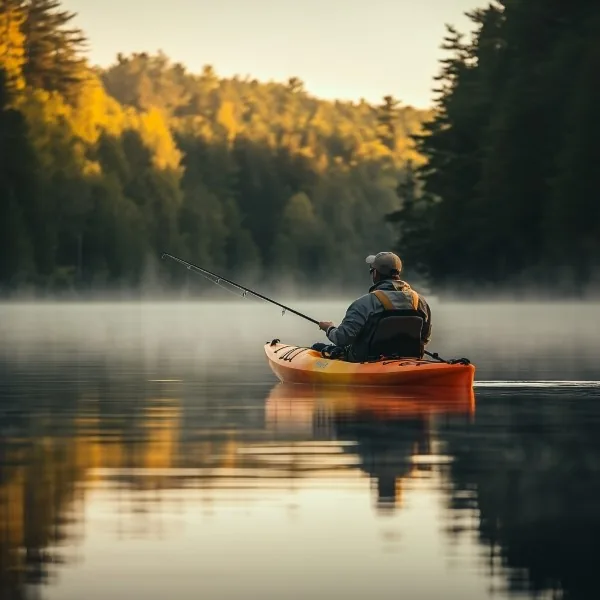

Read the Wind, Current, Waves, and Exposure
Do not judge conditions by average wind alone. Watch gusts for several minutes and note whether they are building, shifting direction, or repeatedly pushing the kayak off course.
Read the waves as well as the wind. Check their direction, height, spacing, and whether they break; waves striking the kayak broadside can make an otherwise manageable drift or anchor position unsafe.
Offshore wind, open water, narrow channels, and shorelines without nearby landing options all raise the consequences of a mistake. The farther you are from shelter, the more time and effort you may need to reach a safe landing.
There is no single wind speed that defines safe kayak fishing for everyone. Set limits for your kayak, experience, water temperature, visibility, and rescue options, then leave when you doubt your control, orientation, or ability to return safely.
Reassess after a wind shift or when waves build. A spot that felt comfortable earlier can become exposed as direction and force change.


Match Anchor Type to the Bottom and Conditions
The best kayak anchor depends on the bottom, not just its weight. Wind, current, kayak windage, where you place the anchor, and the line angle all affect holding power; adding weight will not fix a poor set or an unsafe position.
| Anchor type | Suitable bottom | How it holds | Likely problem | Poor choice when |
|---|---|---|---|---|
| Grapnel | Rock, rubble, or structure | Folding arms catch on irregular features. | Arms can snag in weeds, brush, or rocky crevices. | The bottom is soft and featureless, or snags are difficult to avoid. |
| Claw | Varied bottoms where the anchor can set | Its curved shape can dig in when pulled along the bottom. | It may fail to set on a poor surface or under an unsuitable pull. | The anchor cannot settle and catch before wind or current loads the kayak. |
| Mushroom | Soft mud or silt | Its rounded profile settles into soft material. | It can slip on hard bottom or struggle under strong pull. | Water is exposed, or wind and current place heavy load on the line. |
A grapnel is compact and can catch structure, but that same grip can make it hard to retrieve. A mushroom anchor suits soft bottoms in calm, protected water, while a claw offers a broader option across varied bottom types when it can set properly.
A stake out pole is for shallow water where it can reach a suitable bottom. It holds by planting directly into the substrate, so it serves a different job from an anchor intended to work in deeper water.
Set the Anchor Line and Kayak Orientation
Anchor scope means the length of line paid out compared with the vertical water depth. A longer line lowers the pull angle and can help the anchor set, but it also needs space for the kayak to swing.
| Water depth | At 3:1 scope | At 5:1 scope | Practical line range |
|---|---|---|---|
| 6 feet | 18 feet | 30 feet | 18 to 30 feet |
| 10 feet | 30 feet | 50 feet | 30 to 50 feet |
An anchor trolley lets you move the line attachment point along the kayak and adjust its angle. Aim the bow into the stronger combined force when conditions allow, and avoid staying broadside to wind, current, or waves.
Is an anchor trolley necessary? It is useful when you need to change the attachment point and kayak angle, but it does not replace a safe anchor location, adequate scope, or a reachable quick release.
Should you anchor from the front or back? The safest attachment point depends on the strongest force and wave exposure, so neither bow nor stern is always correct; choose the position that keeps the kayak from being pulled broadside or toward danger.
Keep rods and electronics secured and low enough to limit loose gear on deck. For related tackle and electronics setup, see our baitcasting combo guide and Garmin Striker Vivid 4cv review.
Control Drift Without Holding Position
A drift sock, sometimes called a sea anchor, slows and steadies the kayak rather than stopping it. Choose the attachment point to limit spinning and keep the kayak oriented for casting.
| Method | Holds position or slows movement | Suitable depth or setting | Main limitation |
|---|---|---|---|
| Drift sock | Slows and steadies a drift | Open water where a controlled drift is useful | Does not stop movement, and can snag or cause unwanted yaw if placed poorly. |
| Stake out pole | Holds position when planted | Shallow water with a reachable, suitable bottom | Cannot reach a bottom that is too deep for the pole. |
| Anchor | Holds position when set correctly | Water where the anchor reaches a compatible bottom and has room to swing | Can snag, slip, or load the kayak in an unsafe direction. |
| Controlled paddling | Adjusts position and movement continuously | Areas where the paddler can maintain control and a clear route | Requires attention and reduces time available for casting. |
Deploy the drift sock where its line stays clear of your paddle, fishing lines, and path of travel. Retrieve it from a controlled position before moving or landing, rather than letting the line trail where it can catch.
If the sock or its line snags, do not pull the kayak toward the obstruction. Release or cut free only when you can do so safely, and keep control of the kayak as the priority.
Controlled paddling or a stake out pole can offer safer, more precise position control than an anchor or sock in the right setting. Arrange common fishing gear so the deck stays organized.


Deploy, Release, and Retrieve Safely
Prepare a reachable quick release before you deploy an anchor. Keep the line clear of your body and paddle, and never tie it to yourself.
Lower the anchor instead of throwing it, then pay out line as the kayak settles. Secure the line only after confirming that the kayak is not being pulled broadside or toward a hazard.
Keep the release within reach while fishing and leave the anchor if wind, current, waves, or kayak orientation turn against you. A quick release gives you an option to regain control instead of fighting a loaded line.
To retrieve, move toward the anchor point and take in slack gradually. Do not haul against a loaded line from an unstable position, and avoid anchoring in a channel, near boat traffic, in breaking waves, or where a snag could pull you into danger.
Use This Step by Step Field Checklist
- Check conditions before launch. Review forecast wind and gusts, water conditions, your return route, nearby shelter, and the limits of your kayak, experience, and rescue plan.
- Observe from protection. Note wind direction, current, and waves, then watch how your loaded kayak responds. Identify the nearest safe landing before moving farther out.
- Choose your position method. Use a controlled drift when moving coverage is useful and manageable. Anchor only when the bottom, room to swing, line scope, and kayak orientation support a safe hold.
- Prepare before deployment. Clear the line path, select the trolley position, ready the quick release, and estimate scope by multiplying water depth by 3 to 5.
- Check your control after setting. Confirm the kayak is stable, properly oriented, and clear of hazards. Release or leave if control is deteriorating.
- Reassess and retrieve early. Check again after a meaningful change in wind or waves, and retrieve gear before it becomes loaded, snagged, or difficult to manage.
Our field rule: If you cannot explain how you will regain control and reach a safe landing, do not commit to the anchor or drift plan.


Frequently Asked Questions
Can I use two anchors to keep a kayak from swinging?
A two point mooring can reduce swing in sheltered, stable water, but it fixes the kayak between two lines and can make a sudden wind shift harder to manage. Use it only when both anchor points stay clear and each line can be released independently.
How can I keep anchor line from tangling with fishing rods and paddle gear?
Store the line in a dedicated container or tidy coil, separate from rod holders and paddle storage. Keep loose line out of the cockpit and bring only the length you need onto the deck.
Is it safe to fish from a kayak in offshore wind if the water looks calm?
Calm water at the launch does not show how difficult the return may become once you move farther offshore. Wind can push you away from land while the surface still appears manageable, so judge the route and available shelter, not appearance alone.
Should I use a personal flotation device while kayak fishing in windy conditions?
Yes, wear a properly fitted personal flotation device whenever you fish from a kayak, including in light wind. Wind can change the conditions quickly, and a worn device is immediately available if you capsize.
Can a drift sock help in moving water as well as wind?
Yes, a drift sock can slow movement when current contributes to the kayak’s drift. In cross flow, watch for the hull turning as the sock loads, and adjust its position if the kayak no longer faces the direction you need.
Should I use an anchor chain with a kayak anchor?
A short chain near the anchor can help keep the lower part of the rode close to the bottom, but it also adds weight and another item to handle in a small cockpit. Keep it secured when stowed so it cannot roll into the paddle or fishing lines.
How windy is too windy for kayak fishing?
Use your return route as the test: if you cannot maintain control all the way to a safe landing, stop fishing and head in.
Conclusion
Kayak Fishing in Wind: Decide When to Drift or Anchor by matching the fishing task to the water, not by treating an anchor as the default. Read wind and current together, choose gear that suits the bottom, use enough line scope, and keep a quick release ready.
When gusts build, waves turn broadside, or a safe return becomes doubtful, leave the position and get to shelter. A dialed in plan helps us fish with confidence while keeping control of the kayak as conditions change.
Download the Companion Printable Reference Sheet (PDF)
Save or print our one-stop reference sheet for this guide: Kayak Wind Speed Tactical Chart: Drift Sock Sizing vs Anchor Trolley Setup. Includes the full specification comparison matrix and step-by-step field checklist.
