

Walleyes through the ice often bite best around dawn, dusk, and after dark, and the right depth depends on structure, season, water clarity, and the fish you see on sonar. Find a travel edge, keep the lure near active fish, and change your jigging cadence when a walleye follows without biting.
Key Takeaways
- Plan around low light, especially the period before sunset and just after it.
- Choose depth by structure and fish location, not by a single number that is supposed to fit every lake.
- Use a jigging spoon to attract fish, then slow down with a pause or subtle quiver when one approaches.
- Match a spoon’s profile and fall rate to the depth, forage, and fish response. Color alone does not decide the best lure.
- Pair a jigging rod with a deadstick or tip up and live minnow where local rules allow.
- Check ice yourself, follow state DNR safety guidance, and review current regulations before you fish. Our ice fishing guides cover other practical ways to prepare for a day on the ice.
Free Printable Worksheet (PDF)
Print or save the one-page companion to this guide: Walleye Ice Fishing Plan and Catch Log. It collects the key tables and the checklist from this article.
Related ice fishing guides
Why walleye feed during low light
Walleyes are adapted to finding prey in dim light. Their eyes gather light effectively, which helps them feed when other visual predators may be less active. That makes dawn, dusk, and nighttime valuable parts of the walleye fish activity window. The Minnesota Department of Natural Resources’ walleye ice fishing guidance discusses the connection between low light and shallow walleye fishing.
The Minnesota DNR identifies the 90 minutes prior to and just after sunset as prime fishing times. Many anglers work shallow water during low light, then look deeper during brighter parts of the day.
After dark, walleyes may continue feeding along shallow breaks, weed edges, and routes that connect cover to deeper water. Set up before the light fades, keep the lure visible, and make small adjustments instead of assuming fish will move far from their daytime route.
Choose depth by structure and ice period
The best depth for ice fishing for walleye changes with the lake, season, water clarity, available forage, and fish activity. Start with a structure feature, then use sonar to see whether fish are near the bottom or suspended above it.
| Ice period | Structures to check | Depth and location approach |
|---|---|---|
| Early ice | Shoreline breaks, points, weed edges, and nearby rock or gravel transitions | Start along accessible shallow feeding areas and follow the break toward deeper water. Check a nearby route or edge if the first holes show no fish. |
| Midwinter | Humps, basin edges, mud flats, and transitions between soft bottom and rock or gravel | Check the edge of a flat and the adjacent drop. Use sonar to locate fish and forage, including suspended marks, rather than fishing only on bottom. |
| Late ice | Shallow points, weed edges, shoreline breaks, and routes leading toward spawning areas | Revisit productive shallow structure, but keep a nearby deeper edge in your search. Fish location can shift with changing conditions and seasonal movement. |
These are starting patterns, not fixed rules. A point can connect shallow weeds to a deep basin, while a hump may hold fish on its crown, shoulder, or nearby flat. Hole hopping works best when we move between nearby pieces of useful structure, not when we drill randomly across featureless ice.
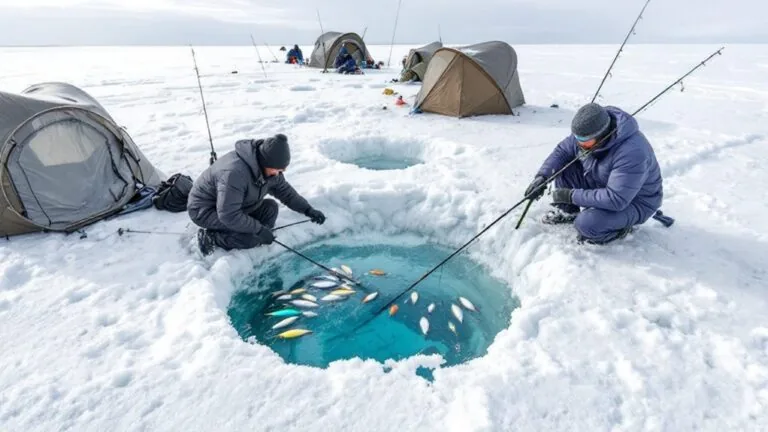
DNR timing and depth facts to use as starting points
State guidance gives useful reference points, but it does not replace checking the structure and fish marks on the lake you are fishing. Clear water, snow cover, weather, and local forage can all affect where walleye hold and how readily they approach a lure.
| Guidance | What it can help you plan | Source |
|---|---|---|
| Minnesota DNR says many walleye anglers fish shallow water, perhaps 10 feet or less, at dawn and dusk, then move deeper during brighter times of day. | Use light level as a clue for where to begin, then adjust to the lake’s structure and fish marks. | Minnesota DNR |
| Minnesota DNR identifies the 90 minutes prior to and just after sunset as prime fishing times. | Arrive early enough to set up and fish through the evening activity window. | Minnesota DNR |
| Wisconsin DNR says the best depths on clear lakes are usually 10 feet to 20 feet. | Use clarity and lake conditions to shape your search, not as a universal depth rule. | Wisconsin DNR ice fishing tips |
Pick a spoon or lure for the job
A jigging spoon can call fish in with flash and a strong lift, then tempt a strike as it falls. There is no single best spoon size for every walleye lake. Start with a profile that resembles local forage and a weight that reaches your target depth cleanly, then adjust the size and spoon fall rate to fish response.
| Lure type | When to use it | How to work it |
|---|---|---|
| Compact jigging spoon | When fish are active or you need a quick, visible search presentation | Lift with a clear snap, let it fall, and pause. Reduce the lift if fish approach but do not commit. |
| Flutter spoon | When a slower, gliding fall suits the fish response | Use a controlled lift and let the spoon flutter back on slack line. Watch sonar for fish following the fall. |
| Rattle spoon or rattle bait | When you want added sound and vibration, especially while searching a flat or basin edge | Use a few firm lifts to draw attention, then pause and let the lure settle before repeating. |
| Lipless lure | When fish respond to a strong vibration on a lift | Raise it with a controlled snap and allow a measured drop. If fish follow without striking, reduce the movement. |
| Jigging minnow style lure | When a baitfish profile and a more deliberate presentation fit the fish activity | Use shorter lifts and longer pauses, keeping the lure near the depth where fish appear on sonar. |
For clear water and brighter conditions, natural or metallic finishes can look convincing without overwhelming fish. Cloud cover, snow on the ice, stained water, or a night bite can call for stronger contrast, flash, or glow and UV finishes. Try a rattle or brighter finish when fish do not notice a subtle lure, then scale back if they follow but turn away.
Color matters, but so do shape, flash, and fall speed. A broad flutter spoon falls differently from a compact, heavier spoon, so change the lure’s action or weight when it drops past fish too quickly or fails to reach them efficiently.
Jigging cadence, minnow tipping, and sonar
Begin with a clear lift, a controlled fall, and a pause. That lift can attract a walleye from nearby, while the fall or pause often gives it a chance to commit. If a fish appears on your flasher or sonar, stop making large movements and keep the lure close to the depth of the mark.
When a walleye follows but does not strike, avoid overworking the spoon. Hold it still, add a small quiver, or lower it slightly before pausing again. If the fish loses interest, change the cadence or switch to a smaller profile instead of repeating the same hard jigging motion.
Use the flasher as feedback rather than just a depth display. If a fish mark rises with each lift but stalls below the lure, stop raising and hold the spoon around that level; try a subtle quiver before returning to a hard snap. If the mark drops away as the lure rises, lower back toward the fish and soften the next lift. A crisp snap and settling pause with a compact, heavier spoon is a useful search pattern; a broad, lighter flutter spoon with a controlled lift and still pause gives a slower fall for hesitant followers. Change the movement before changing the spoon, so you can tell which adjustment earns a closer approach.
Add a minnow head when fish inspect the lure without striking, bite short, or respond better to a slower presentation. A small piece can add scent and taste while keeping the spoon’s action intact. If you want a live minnow to remain active, use a deadstick beside the jigging rod rather than tipping every lure.
Sonar helps distinguish fish near bottom from fish suspended higher in the water column. Stay on a hole when fish keep appearing and reacting, even if they need time to commit. Move to the next nearby hole when marks disappear and the structure has not produced a response after a few cadence and lure changes.
Plan a walleye trip around the light window
For a walleye trip, choose a lake and structure before you leave, then plan to reach the fishing area well before dusk. Drill and check your first holes while you still have good visibility, and use that early time to locate the break, weed edge, or transition you intend to fish through the evening.
Set a jigging rod where sonar shows activity and place a live minnow on a deadstick or tip up along the same travel route, where regulations permit. Keep your gear organized so you can monitor both lines as light fades, and avoid a long move across unfamiliar ice after dark.
Cloud cover and snow can reduce light beneath the ice, so adjust lure visibility and cadence as the evening changes. A flashier spoon or rattle bait can help fish find a lure, while a quieter presentation can suit a walleye already following it.
Rod, line, and a second minnow presentation
Choose a responsive ice rod with enough backbone to set the hook and enough tip movement to show a light bite. A spinning reel with a smooth drag makes it easier to control a fish close to the hole, while line with manageable memory helps the lure move cleanly in cold conditions.
Use line strength that suits the fish, cover, and lure weight. Lighter line can improve lure movement and bite feel, while a stronger setup gives more control around rough structure. Check for ice buildup and damaged line often, especially after landing a fish.
A deadstick keeps a live minnow moving naturally while you jig nearby. Set it so the bait fishes at the level where you expect walleye to travel, and keep the two lines far enough apart to limit tangles while still letting you watch both. Line limits and the number of rods or tip ups allowed vary by state and water body.
For line choice on the jigging rod, our ice fishing line guide compares braid, fluorocarbon, and mono. If you run tip-ups for the second presentation, see how to rig an ice fishing tip-up.
Deep catches and responsible release
Depth matters after the bite, too. South Dakota Game, Fish and Parks reports predicted walleye mortality of 1.5% in water less than 30 feet and 15% in water deeper than 30 feet. These figures come from one state study, so treat them as a reason to think about release before repeatedly targeting walleye from deep water rather than as a rate for every lake.
Bring a fish up smoothly, handle it with care, and avoid keeping it out of the water longer than needed. Follow current state guidance for handling and release.
Ice Fishing Trip Checklist
Ice safety comes first, before timing, depth, or lure choice. Check ice thickness yourself as you travel, follow current safety guidance from your state DNR, and do not rely on another angler’s report as proof that the route is safe.
- ☐ Check ice thickness yourself and carry appropriate safety equipment.
- ☐ Review weather, access, and current state DNR ice safety guidance.
- ☐ Check current regulations for the water body, including walleye seasons, size and bag limits, line limits, and rules for tip ups or multiple rods.
- ☐ Mark shoreline breaks, points, humps, weed edges, and rock, gravel, or mud transitions on a lake map.
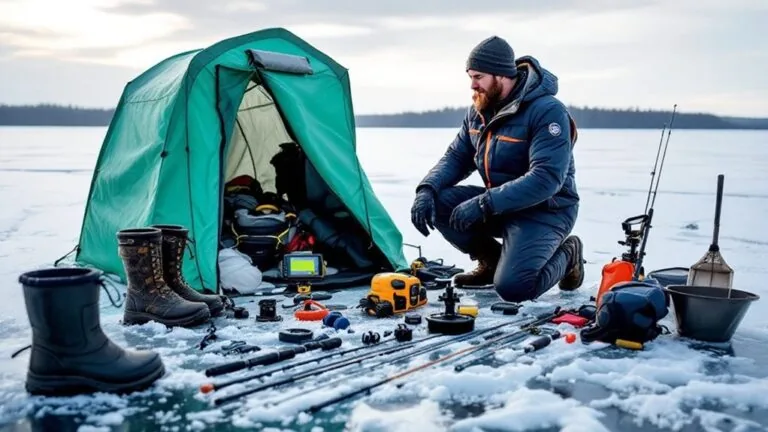
- ☐ Pack a flasher or sonar, jigging rod, spoons, rattle baits, jigging minnow style lures, and live minnows if permitted.
- ☐ Bring a deadstick or tip up for a second presentation where local regulations allow.
- ☐ Plan to arrive before dusk and set up while visibility is good.
Walleye seasons, size and bag limits, and line limits vary by state and water body. Check the current regulations from your state DNR before fishing, including Michigan rules for the specific water you plan to visit.
Summary
Choose a primary travel edge and a nearby deeper backup before drilling, then get set up while visibility is good. At each hole, use sonar to keep the spoon near the fish; if a walleye follows but hesitates, try a pause and quiver before changing lures. This gives you a practical plan for the light window without treating a depth or cadence as right for every lake.
Frequently Asked Questions
Does a full moon change the best time to fish walleye through the ice?
Use the evening light change as your main starting point rather than planning around moon phase alone. A moonlit night can make the surface brighter, so keep an eye on sonar and adjust lure flash or profile to the fish response.
Can I safely ice fish for walleye alone after dark?
Fishing with a partner is a safer choice, especially when moving between holes or leaving a familiar area. If you go alone, tell someone your plan and return time, carry communication and safety equipment, and avoid unfamiliar ice after dark.
How do I keep live minnows in good condition during a cold trip?
Keep the minnow container sheltered from wind and slush, and avoid leaving it exposed while you move between holes. Handle bait gently and replace a sluggish minnow when its movement no longer gives the deadstick a natural presentation.
Should I use an underwater camera along with a flasher for walleye?
A camera can help identify nearby weeds, bottom composition, or how a fish reacts to a lure when water clarity allows a useful view. A flasher or sonar is often more practical for quickly tracking depth and movement while you jig.
What should I do if I cannot safely reach my planned fishing spot?
Choose a safer location or end the trip rather than crossing ice you cannot verify. Walleye timing and lure choice never outweigh a safe route and sound ice conditions.
Do walleyes go shallow at night in the winter?
Yes; start on the shallow side of a break, then check the deeper edge if fish are absent.
Download the Companion Printable Sheet (PDF)
Print or save the one-page companion to this guide: Walleye Ice Fishing Plan and Catch Log. It collects the key tables and the checklist from this article.
Published by The Reel Authority, a publication of Viking Trading Group LLC.
