

Use braid for sensitivity at depth, fluorocarbon for a less visible leader in clear water, and monofilament when stretch helps protect light hooks during a fish’s run. The right choice depends on temperature, shelter, water clarity, target species, and how you want your bait to fall.
Key Takeaways
- Choose braid when low stretch helps you feel light bites or control a lure at depth. In exposed, severe cold, account for water pickup and ice building around the line and reel.
- Choose fluorocarbon for a less visible leader in clear water, or as a main line when its low visibility and faster sink than mono suit your presentation.
- Choose mono when its stretch helps cushion sudden runs and keep small hooks pinned. That stretch can make subtle bites harder to detect at depth.
- Think of dedicated ice lines as cold-weather formulations, not a separate material. Their flexibility and memory depend on the formulation, spool, and conditions.
- Use a braid main line with a fluorocarbon leader when you want braid’s sensitivity and a less visible section near the lure.
- Match pound test to the fish. Panfish need light line for small jigs, while pike call for stronger line and a bite-resistant leader.
- For more winter tactics and safety guidance, visit The Reel Authority’s ice fishing section.
Free Printable Worksheet (PDF)
Print or save the one-page companion to this guide: Ice Fishing Line Selection Chart and Rigging Checklist. It collects the key tables and the checklist from this article.
Related fishing guides
How Braid, Fluorocarbon, Mono, and Ice Lines Compare
Braid has little stretch and a thin diameter for its strength, so it transmits taps clearly and gives you direct control over a vertical jig. Its fibers are often easy to see in clear water, which makes a leader a practical addition.
Fluorocarbon is less visible underwater than many line types and sinks more readily than mono. Those traits suit clear water, direct connections, and presentations where a quicker fall helps.
Monofilament stretches more than braid. That stretch cushions sudden runs and can help keep small hooks from tearing free, but it softens bite feedback and its coils can be troublesome on a small spool.
Dedicated ice lines are made for cold-weather use, but the label alone does not determine how a line handles. Test how it lays on your reel and passes through the guides in the conditions you fish.
| Line type | Cold handling | Memory and stretch | Visibility and sensitivity | Useful role |
|---|---|---|---|---|
| Braid | Fibers can pick up water that freezes in exposed cold. | Low stretch and typically little spool memory. | High sensitivity, but visible fibers can stand out in clear water. | Main line for depth, light bites, and vertical control. |
| Fluorocarbon | Can stiffen in cold; handling varies by line and reel setup. | Less stretch than mono, with memory that can show on a small spool. | Low underwater visibility and strong bite feedback. | Leader for clear water or a main line when its sink rate suits the lure. |
| Monofilament | Can become stiff and coil in cold conditions. | More stretch and spool coils than braid. | More stretch means less direct feedback at depth. | Finesse presentations where cushioning a run helps keep fish pinned. |
| Dedicated ice line | Formulated for cold-weather use, with performance varying by formulation. | Memory and stretch depend on the material and construction. | Visibility and sensitivity depend on the underlying line type. | Choose by how it behaves on your reel and through your rod guides. |
Diameter affects how much line resists a light jig’s fall. The Oklahoma Department of Wildlife Conservation reports that 10-pound monofilament has a diameter of .011 inches and 10-pound braided line has a diameter of .008 inches.
| Line type | Pound test | Reported diameter |
|---|---|---|
| Monofilament | 10-pound | .011 inches |
| Braided line | 10-pound | .008 inches |
Braided line also comes in different strand counts. Game & Fish describes 4-strand and 8-strand braid, with 8-strand braid quieter and smoother through rod guides.
| Construction | Sourced characteristic |
|---|---|
| 4-strand braid | One of the thread counts in which braided line is sold. |
| 8-strand braid | Quieter and smoother through rod guides than 4-strand braid. |
Choose Line for Temperature, Shelter, Clarity, and Depth
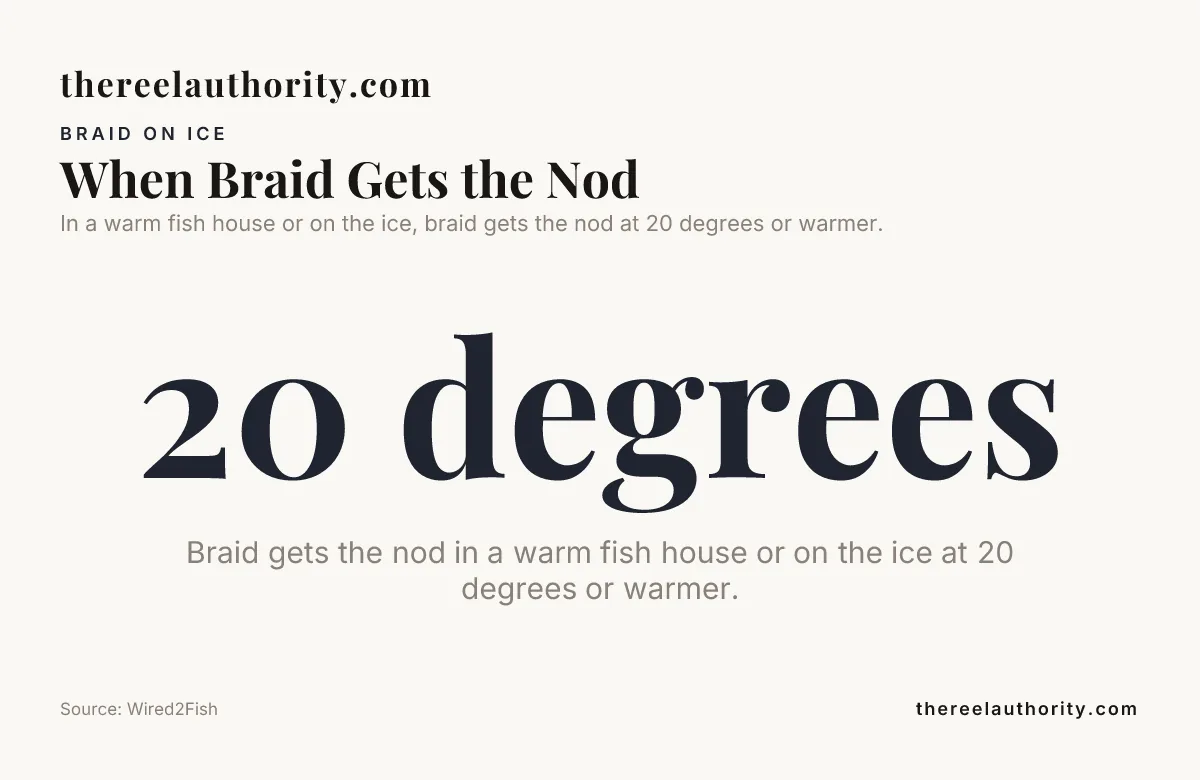
Wired2Fish says braid gets the nod when fishing in a warm fish house or on the ice at 20 degrees or warmer.
When you hole-hop outdoors in severe cold, favor a manageable setup and watch for water freezing around the line, reel, and guides. Clear slush and ice from the line path before it freezes in place, and do not force line through a blocked guide.
In clear water, a braid main line with a fluorocarbon leader keeps the sensitive section away from the lure. In stained water, a direct braid connection can be practical when you want maximum sensitivity and line visibility is less of a concern.
At greater depths or when fish give light bites, braid’s low stretch helps you read what the jig is doing. For small, light jigs, consider line diameter and sink rate together: thicker line creates more resistance, and fluorocarbon generally sinks faster than mono.
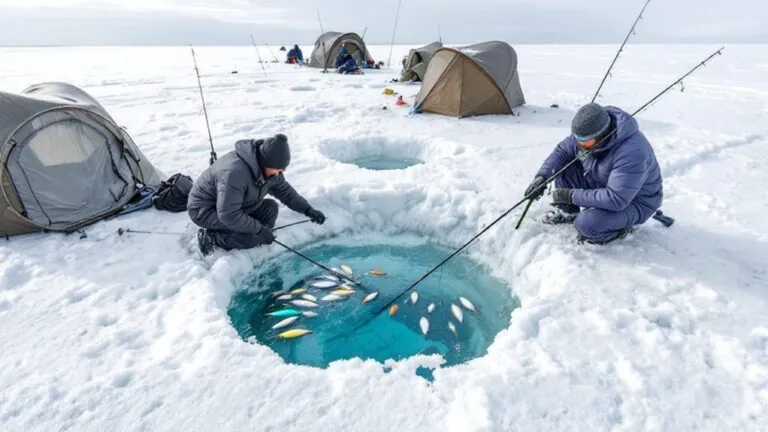
The two images below show anglers fishing on the ice, the setting where temperature and shelter affect line handling.
Match Pound Test and Leaders to the Fish
These pound test ranges give you a starting point for common ice fishing targets. Adjust for lure size, cover, fish size, and how much abrasion your line will face.
| Species | Main line starting range | Leader setup | Why it fits |
|---|---|---|---|
| Panfish | 2 to 4 pound test | Optional fluorocarbon leader in clear water. | Light line works with small jigs; move up for cover or larger fish. |
| Perch | 3 to 6 pound test | Fluorocarbon when water clarity makes visibility a concern. | Balances small baits with extra strength for deeper water or abrasive structure. |
| Walleye | 4 to 8 pound test | Braid main line with a 3 to 6 foot fluorocarbon leader. | Pairs sensitivity with a less visible section near the lure. |
| Trout | 2 to 6 pound test | Mono or fluorocarbon for finesse, or braid for sensitivity at depth. | Adjust for fish size, water clarity, and bait. |
| Pike | 10 to 20 pound test | Wire or heavy fluorocarbon around 20 to 40 pound test. | Use a bite-resistant leader for tooth protection, not visibility alone. |
For panfish, start near the lighter end of the range when you are working tiny jigs in open water. Move up when larger fish or cover raise the chance of a breakoff.
For walleye, a braid main line and 3 to 6 foot fluorocarbon leader make a dialed-in combination for many jig and spoon presentations. Pike are different: their leader needs to resist teeth, so a wire or heavy fluorocarbon section is the important move.
Set Up the Reel, Lure, and Connection
When clear water and bite detection both matter, connect braid to a fluorocarbon leader with a compact knot such as an FG or double uni. Seat it carefully, trim the tags, and test the connection with a firm pull before fishing.
A small swivel can help when a spoon or spinning bait twists the line. Choose a direct leader knot when a simple, compact connection matters more than managing twist.
Line diameter and lure weight work together. Thin braid creates less resistance for a light jig, while thicker line can slow its fall; fluorocarbon’s faster sink than mono can also change a slow-fall presentation.
Reduce coils by spooling under steady tension and avoiding an overfilled small spool. Let mono or fluorocarbon relax before fishing, since high line memory becomes more troublesome on small-diameter reels.
Retie after repeated contact with the ice-hole edge. Replace the damaged section if your fingernail catches a nick, braid strands fray, or repeated coils and tangles make line control unreliable.
Line management matters alongside the reel and lure you choose. For a separate open-water setup, our baitcasting combo guide covers a different style of fishing gear.
Pre-Trip and On-Ice Line Checklist
- Before leaving: Inspect the first several feet of line and the leader for nicks, flat spots, fraying, or weak knots. Retie any section that shows damage.
- After a fish or a scrape: Run the line between your fingers. Cut back damaged line instead of trusting it for the next strike.
- At each hole: Keep line clear of sharp ice-hole edges, slush, and frozen guides. Clear ice carefully, without pulling hard against a frozen line or reel.
- Before lowering a lure: Carry spare line and retie materials, then make sure a cold, wet reel releases line smoothly.
- Before moving onto the ice: Check local ice thickness and conditions, fish with a partner when possible, and carry appropriate flotation and ice safety equipment. Sound line does not make unsafe ice safe.
Bottom Line
The best ice fishing line is the one that fits your conditions and presentation. Use braid for direct feedback, fluorocarbon for a less visible leader or faster sink, and mono when stretch helps protect light hooks.
Choose pound test for the fish, inspect line throughout the trip, and adjust your setup for temperature and shelter. For depth readings that help you keep a lure near fish, see our Garmin Striker Vivid 4cv review, and visit The Reel Authority for more fishing gear guidance.
Frequently Asked Questions
Can ice fishing line be used for more than one season?
Yes, ice fishing line can last more than one season when it remains in sound condition. Age alone does not tell you whether line is dependable, so judge it by damage, handling, and how reliably it holds knots.
How should I store fishing line between ice fishing seasons?
Store line in a cool, dry place away from direct sunlight and heat sources. Keep the spool protected from dust and avoid storing it under pressure that can deform the line over time.
Can I use my open-water fishing line for ice fishing?
Yes, open-water line can work for ice fishing if it remains manageable on your reel in cold conditions. Test a short length on the actual spool and check whether it lays cleanly and passes through the guides without persistent coils.
What should I do if my line or rod guides freeze while fishing?
Pause and let the frozen section thaw gently in a sheltered spot before continuing. Do not pull hard, crank the reel against resistance, or use an open flame to thaw the line or guides.
Download the Companion Printable Sheet (PDF)
Print or save the one-page companion to this guide: Ice Fishing Line Selection Chart and Rigging Checklist. It collects the key tables and the checklist from this article.
Published by The Reel Authority, a publication of Viking Trading Group LLC.


